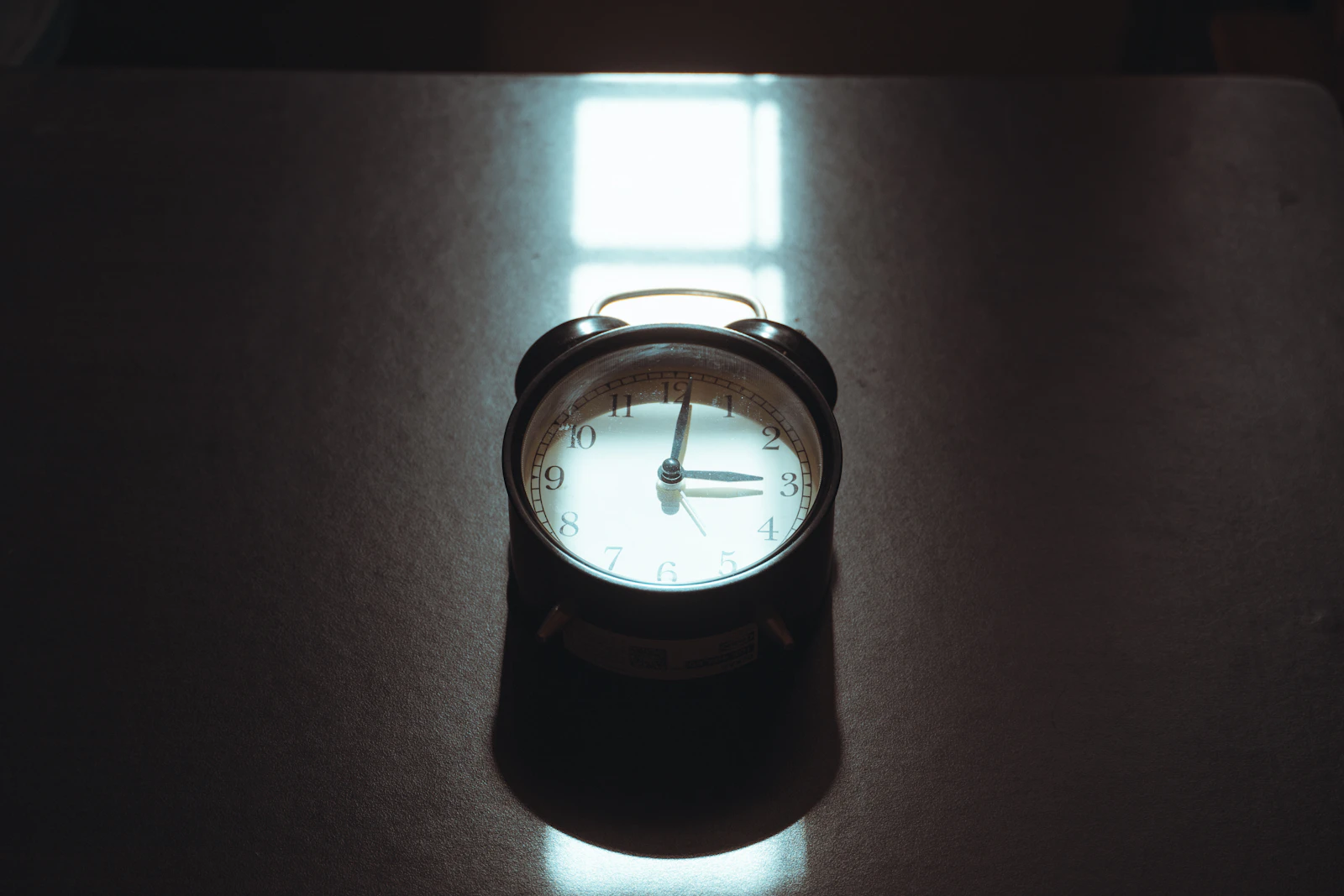
The snooze button is the most-used feature of the most-used app on most phones, and almost everything written about it — including, until recently, this page — states with total confidence that it makes your morning worse.
The research does not actually support that confidence. Here is what is known, what is contested, and what is left over.
Sleep inertia is the grogginess, and it is a real state
When you wake up, you do not switch from asleep to awake. There is a transitional period where alertness, reaction time, coordination and judgement are all measurably below your normal baseline. This is sleep inertia. Everyone gets it. It is worse when you were woken out of deep sleep, worse when you are sleep-deprived, and worse at times your body clock thinks it should still be night.
The important properties of sleep inertia:
- It is temporary. Cognitive testing on people woken out of deep N3 sleep shows moderately impaired mental performance for 30 minutes to 1 hour.
- It is worst immediately on waking and improves from there.
- It is worst out of N3, the deepest stage, and mild out of the light stages.
The intuitive next step is that inertia must reset every time you fall back asleep and are woken again — which would make snoozing self-defeating by construction. That is the standard account, it is what this post used to assert, and the evidence for it is weaker than its popularity suggests.
What nine minutes buys you: the evidence is split
The intuitive account — each snooze restarts the grogginess clock, so three snoozes means arriving at your day with sleep inertia freshly reset — has one study behind it and one against it, and the one against it is larger.
For: Ogawa, Kaizuma-Ueyama and Hayashi (2022) ran ten university students through polysomnography across snooze and no-snooze nights. Snoozing prolonged wake and light N1 sleep in the final twenty minutes, and alertness after waking improved over pre-sleep levels in the no-snooze condition but not the snooze one. Their conclusion: repeated forced awakenings fragment sleep and prolong inertia.
Against: Sundelin, Landry and Axelsson (2024) surveyed 1,732 people and put 31 habitual snoozers through a lab protocol. Thirty minutes of snoozing improved or did not affect cognitive performance on waking, compared with an abrupt awakening. It cost about six minutes of sleep. It produced no clear effect on the cortisol awakening response, morning sleepiness, mood, or overnight sleep architecture. And it prevented awakenings out of slow-wave sleep — which, since N3 is the stage that produces the worst grogginess, is a mechanism by which snoozing could plausibly help.
Ten people against thirty-one plus a survey is not a tie, and the larger study is the more recent one. The honest summary is that snoozing is not the self-sabotage it is usually described as, and for late chronotypes — people whose body clock runs late, who are the people most drawn to snoozing in the first place — a brief snooze may genuinely take the edge off sleep inertia.
What neither study supports is the folk version in either direction. Snoozing is not free extra rest, and it is not the thing ruining your mornings.
The problem that survives the evidence
If snoozing is roughly neutral, the interesting question changes. It stops being "how do I stop snoozing" and becomes: who is making the decision?
The following is reasoning about interface design rather than a research finding, and it is worth separating from the section above.
The decision is made by the worst possible version of you.
Sleep inertia specifically degrades judgement and impulse control, and the snooze decision has to be made in the first ten seconds of waking, when inertia is at its maximum. You are asking someone with temporarily impaired judgement to make a decision about their whole day, in the dark, with one thumb. Of course they choose more sleep.
It is not a discipline failure. It is a design failure: the interface puts the easiest possible action — one tap, no visual attention required — behind the choice you would not endorse thirty minutes later.
What to do instead
Set the alarm for when you actually want to be up. Not thirty minutes earlier "for buffer". Given the evidence above this is no longer a claim that the buffer is harming you — it is that thirty minutes of low-quality fragmented sleep is a poor use of thirty minutes you could have spent asleep properly, and that a decision made three times in a row at your least lucid is a decision you are not really making.
Get light. Light exposure is one of the more reliable accelerators of sleep inertia clearing. Opening the blinds beats scrolling in the dark by a wide margin.
Move. Standing up, walking, and — genuinely — getting the heart rate up a little shortens the fog faster than lying still deciding whether to get up.
Make the first action something other than a tap. If the only thing standing between you and another cycle is a nine-minute button, sleep inertia will press it. If the first thing that happens is a voice talking to you, or a task that needs actual attention, you are past the ten-second window where the bad decision gets made.
Consider whether snoozing is even your problem. Some people snooze; some people never hear the alarm at all. Those are different failures with different fixes, and the second one — which the evidence is far less ambiguous about — is covered in why you sleep through your alarm.
Sources
- Sundelin, T., Landry, S., & Axelsson, J. (2024). Is snoozing losing? Why intermittent morning alarms are used and how they affect sleep, cognition, cortisol, and mood. Journal of Sleep Research, 33(3), e14054.
- Ogawa, K., Kaizuma-Ueyama, E., & Hayashi, M. (2022). Effects of using a snooze alarm on sleep inertia after morning awakening. Journal of Physiological Anthropology.
- Patel, A. K., Reddy, V., Shumway, K. R., & Araujo, J. F. Physiology, Sleep Stages. StatPearls, NCBI Bookshelf. (Sleep inertia after an N3 awakening: "moderately impaired mental performance for 30 minutes to 1 hour".)
The thing that makes snoozing hard to beat is that it asks nothing of you. The counter is to make the first thirty seconds of the morning ask something — which is really a question about what happens right after the alarm, not about the alarm itself. That is the first five minutes.